
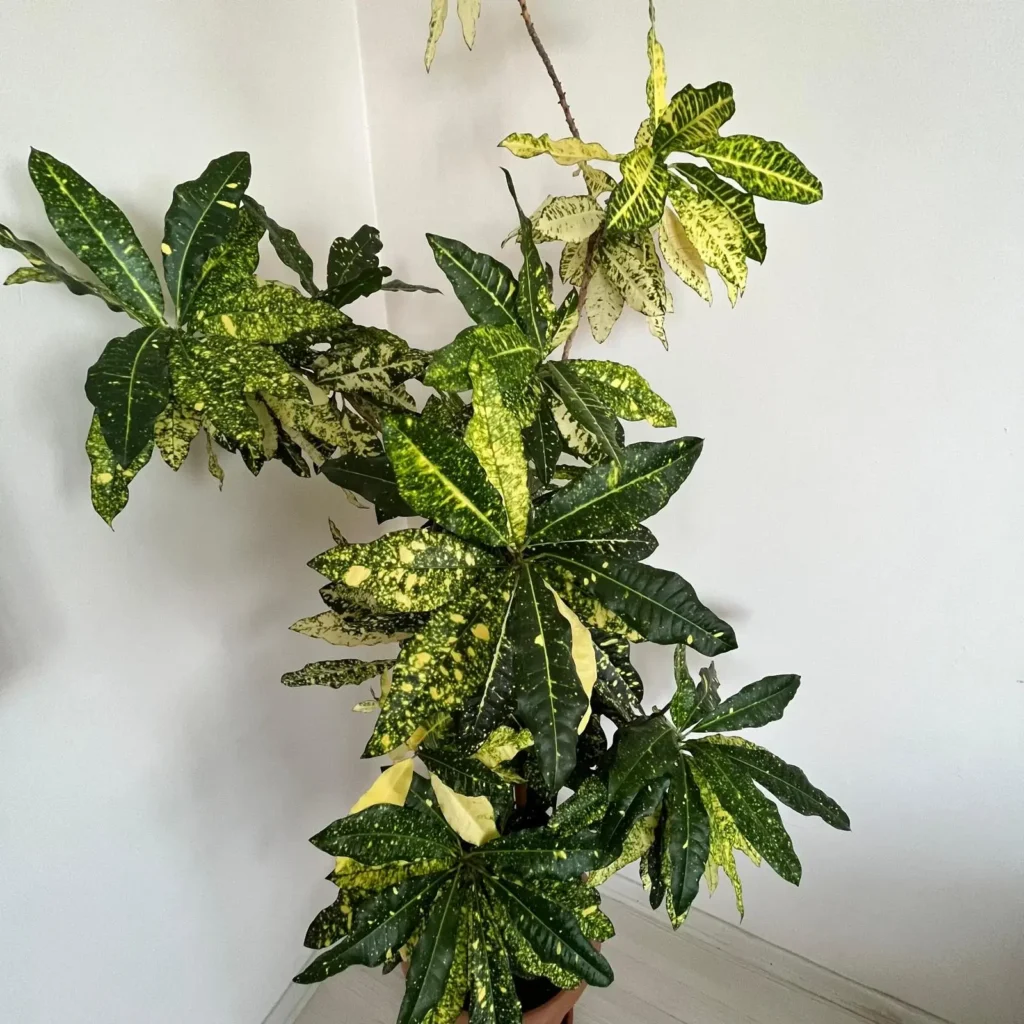
Croton
Codiaeum variegatum
Updated Sep 14, 2026
Croton (Codiaeum variegatum), also known as Garden Croton, is a woody tropical evergreen valued for thick, glossy leaves patterned with green, yellow, orange, red, pink, bronze, or purple. Its many cultivars include broad, lobed, narrow, curled, and twisted leaf forms.
About Croton
Croton is a woody evergreen shrub in the spurge family, valued for foliage that often looks hand-painted. Cultivars differ greatly in appearance. Their thick, glossy leaves may be broad, narrow, lobed, crinkled, curled, or twisted into corkscrew-like shapes. Veins, streaks, spots, and irregular patches bring together shades of green, yellow, orange, pink, red, bronze, and purple.
The colors can change as each leaf matures. Young foliage may begin with a strong yellow or green base before developing deeper orange, red, or purple tones. Occasionally, one branch produces leaves that differ from the rest of the plant. Small flowers can appear on mature specimens, but the foliage remains the main attraction.
Croton naturally develops as a branching shrub or small tree in warm, humid conditions. Container size and occasional pruning can keep its growth more compact. The most colorful, well-shaped plants receive strong light, balanced moisture, steady warmth, and adequate humidity.
How to Care for Croton
Watering
Water when the top inch (2–3 cm) of soil feels slightly dry. Moisten the entire root ball, allow the excess to drain, and empty any water collected in the saucer or decorative outer pot. This approach provides moisture throughout the container without leaving the roots submerged.
Croton has a moderate water requirement, although the interval between waterings changes with light, warmth, pot size, and seasonal growth. Check the soil rather than relying on a fixed weekly schedule. Bright, warm conditions increase water use, while cooler or dimmer conditions slow it down.
The soil should not remain saturated, but the root ball should not be left completely dry for an extended period. Water less frequently when growth slows, keeping the same practice of checking the upper layer before adding more.
Sunlight
Give Croton very bright light. Full sun can support strong color after gradual acclimation, while filtered light is safer where intense afternoon heat could scorch the foliage. Several hours of gentler direct sun can help maintain vivid variegation and compact growth.
Low light usually produces greener leaves and wider spaces between them. Increase direct exposure gradually when changing the plant's position, since an abrupt move into intense sun can damage the foliage. Morning sun is generally less harsh than concentrated afternoon exposure through glass.
Rotate a container occasionally if one side consistently faces the light. This allows different parts of the plant to receive stronger exposure and encourages a more balanced outline. Once a suitable location has been found, avoid moving the plant unnecessarily between sharply different light levels.
Temperature
Croton generally grows steadily within an approximate temperature range of 70–81°F (21–27°C). Short periods outside this range are not necessarily harmful, but sudden temperature changes may trigger leaf drop.
Keep the plant away from cold drafts, heating or air-conditioning vents, and cold window glass. If relocation is necessary, choose a position with similar warmth and light to reduce stress during the adjustment.
Humidity
High humidity suits Croton's tropical growth habit and helps its broad leaves remain in good condition. A humidifier offers the most consistent way to raise humidity when the surrounding air is dry.
Grouping plants can create a slightly more humid area, provided their leaves are not pressed together. Some air circulation should remain around the foliage. Keep Croton away from radiators, fireplaces, and other heat sources that rapidly dry the nearby air.
Soil
A well-draining, moisture-retentive potting mix keeps water and air available to the roots. An all-purpose potting mix amended with perlite and fine pine bark provides a suitable balance. It should absorb water evenly, release the surplus through the container, and stay lightly moist for a short time without becoming muddy.
Dense garden soil can compact in a container and restrict both drainage and root aeration. At the other extreme, a very coarse succulent mix may dry faster than Croton prefers. A balanced mixture is more suitable than a medium designed either to hold water for many days or to dry almost immediately.
The container must have unobstructed drainage holes. Gravel at the bottom does not correct poorly draining soil. As the mix ages and loses its open texture, replacing it during repotting restores space for air and allows moisture to move more evenly through the root zone.
Feeding
Apply a balanced, water-soluble houseplant fertilizer at a diluted rate while the plant is producing new leaves. Occasional feeding is usually sufficient, especially when the potting mix is relatively fresh. Reduce or pause fertilizer when growth slows.
Adding more fertilizer does not produce richer foliage when the plant lacks light. Maintaining good light, warmth, and moisture should remain the priority, with fertilizer serving as a modest supplement rather than the main driver of growth.
Pruning & Repotting
Pruning helps maintain a fuller outline when stems become tall or sparsely branched. Early spring is a suitable time to shorten leggy growth before the plant enters a stronger growth period. Make each cut just above a leaf or node with clean pruners. Soft growing tips can also be pinched to encourage additional branches.
Repot when roots have filled the container or the root ball has become tightly packed. Move to a pot only 1–2 inches (3–5 cm) wider than the current one. A much larger container holds a greater volume of unused soil, which can remain wet for longer than the roots need.
Set the plant at the same depth as before and water the fresh mix evenly. Avoid combining major pruning, repotting, and a dramatic location change unless necessary. Spacing these tasks gives Croton time to resume growth between adjustments.
Propagation
Stem cuttings preserve the distinctive foliage of a selected cultivar. Take a healthy section of soft growth about 4–6 inches (10–15 cm) long, remove the lowest leaves, and place the bare nodes in a free-draining potting mix. The cutting may also begin forming roots in water before being transferred to soil.
Air layering provides another way to produce a new plant from an established stem. Growing Croton from seed is less dependable when matching the parent is important because seedlings may not retain the same leaf colors and patterns.
Pests & Leaf Care
Spider mites, mealybugs, and scale insects may occur on Croton. Check the undersides of leaves, young growth, and the points where leaves join the stems during routine care. Wiping broad leaves gently with a damp cloth removes dust and makes these pests easier to notice before they spread.
Safety
Broken leaves and cut stems release sap that can irritate the skin and eyes. Wear gloves when pruning or taking cuttings, avoid touching the face, and wash hands and tools afterward. The sap may also stain fabric.
Croton should be kept away from children and pets that may chew the foliage. Swallowing plant material can cause digestive upset, so suspected ingestion should be followed by appropriate medical or veterinary advice.