
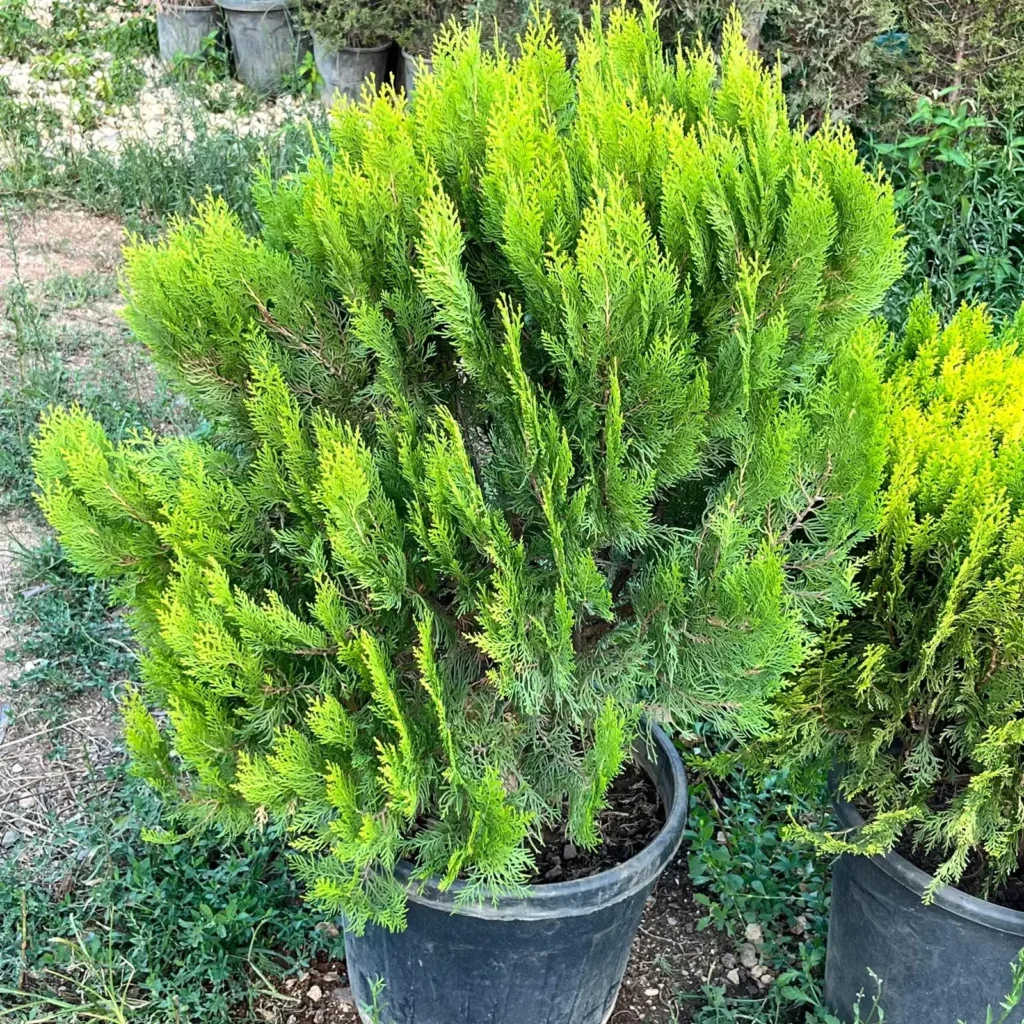
Dwarf Golden Oriental Arborvitae
Platycladus orientalis ‘Aurea Nana’
Updated Sep 24, 2026
Dwarf Golden Oriental Arborvitae (Platycladus orientalis ‘Aurea Nana’) is a slow-growing evergreen shrub with a compact, rounded outline and dense golden foliage. Its bright color, tidy habit, and manageable size make it a natural fit for sunny borders, low hedges, rock gardens, and outdoor containers.
About Dwarf Golden Oriental Arborvitae
Dwarf Golden Oriental Arborvitae is a slow-growing evergreen conifer prized for its compact form and luminous foliage. Its small, scale-like leaves overlap along flattened, upright sprays, creating a dense surface rather than the needle-covered look of many other conifers. New growth is yellow to golden yellow, with the brightest color concentrated toward the outer tips. Older and shaded foliage is usually greener.
The shrub naturally develops a rounded to broadly oval outline and commonly matures at about 2–3 feet (60–90 cm) tall and wide. It works well as a specimen, a repeating accent along a path, a low informal hedge, or a permanent feature in a large outdoor container. Because it grows slowly, it needs little routine shaping.
Its color may shift with the seasons. Strong light supports the richest gold during active growth, while foliage can take on bronze or copper tones in cold weather. Even, seasonal bronzing is usually normal. Isolated brown patches, brittle shoots, or continued dieback in spring deserve closer attention because they may point to dry roots, poor drainage, pest activity, or damaged branches.
How to Care for Dwarf Golden Oriental Arborvitae
Watering
Water moderately and deeply, especially during the first growing season. A newly planted shrub has a limited root system and should not be allowed to dry out completely. Check the soil near the rootball rather than relying on a fixed schedule. When the top inch (2–3 cm) feels dry, water slowly enough to moisten the full root area, then let excess moisture drain away.
Once established, Dwarf Golden Oriental Arborvitae can handle short dry periods, but prolonged drought may dull its color or cause crisp brown tips. Hot, windy weather and container growth increase water loss. A long, slow soaking is more useful than frequent splashes that wet only the surface.
Avoid keeping the ground constantly saturated. Yellowing, soft discoloration, or decline while the soil remains wet can signal that roots are short of air. Correct drainage and reduce watering rather than adding more water to a stressed plant.
Sunlight
Choose full sun for the densest habit and clearest golden color. A position receiving at least six hours of direct sun is ideal. The plant can tolerate some partial shade, but reduced light commonly produces greener foliage, a less even outline, and more open growth.
In intense summer heat, a little protection late in the day can help limit foliage scorch, particularly while the roots are becoming established. Morning sun with light afternoon shade is a reasonable compromise. Before moving a browning shrub into deeper shade, check moisture, drainage, and wind exposure because several stresses can look similar.
Temperature
Dwarf Golden Oriental Arborvitae grows most comfortably at about 64–81°F (18–27°C) during active growth. As an outdoor evergreen, it is expected to experience cooler winter weather and warmer summer days, so this range describes favorable growth conditions rather than a required year-round temperature.
Keep the root zone evenly moist during extended heat, but never leave it waterlogged. Drying winds can pull moisture from evergreen foliage even when growth is slow, making young plants and exposed containers more vulnerable. A sheltered position and a layer of mulch help reduce rapid moisture swings. In winter, uniform bronzing can be seasonal; wait for spring growth before assuming evenly discolored foliage is dead.
Humidity
Moderate outdoor humidity is suitable. This conifer does not need misting or any other attempt to raise humidity. Its more important needs are moisture at the roots, drainage below them, and moving air around the foliage.
Dense branching can trap fallen interior foliage and remain damp after rain. Periodically lift the outer sprays and gently remove loose, dead material without scraping live stems. Good airflow helps prevent problems in humid or rainy periods, so do not let neighboring plants press against the shrub.
Soil
Plant in fertile, well-draining soil that holds some moisture without staying soggy. Dwarf Golden Oriental Arborvitae can grow in clay, loam, sandy, chalky, acidic, neutral, or alkaline ground when the root zone drains properly. Soil structure matters more than chasing a narrow pH target.
Before planting, watch what happens after heavy rain. If water stands in the chosen spot or the soil remains sticky and airless, select a raised location or improve the wider planting area. A small pocket of loose mix inside compacted ground can collect water around the roots.
For a container, choose a high-quality outdoor potting mix that drains freely and a pot with unobstructed holes. The container should be broad and stable enough to resist tipping. Never let it sit in a saucer filled with water.
Planting and Mulching
Set the top of the rootball level with the surrounding soil, with the first main roots close to the surface. Avoid burying the stem base, which can keep the bark damp and interfere with root aeration. Spread circling roots gently where possible, backfill with the original soil, and water thoroughly to settle the planting area.
Add a 2–3 inch (5–8 cm) layer of organic mulch over the root zone to slow evaporation and soften temperature changes. Leave a clear space around the trunk instead of piling mulch against it. Recheck the plant after soil settles and make sure neither soil nor mulch has covered the root flare.
When planting several shrubs, allow room for each one to develop its natural outline. Crowding creates a quick filled-in effect but reduces light and air movement later.
Pruning and Shaping
Little pruning is needed because the plant is naturally compact. In late winter or early spring, remove dead, broken, or clearly diseased shoots. Lightly trim soft outer growth if a more formal outline is wanted, but keep most cuts within green foliage.
Do not cut deeply into bare old wood. Sections without live foliage may fail to produce new shoots, leaving permanent gaps. If one branch projects beyond the outline, shorten it gradually to a leafy side shoot rather than shearing the entire shrub heavily. Clean cutting tools before moving between plants.
Seasonal Checks
Inspect the shrub occasionally rather than waiting for widespread browning. Bagworms, spider mites, and scale insects can occur on arborvitae, although a healthy plant may have few problems. Look for hanging silken bags, fine stippling, webbing, or immobile bumps on shoots. Early detection makes simple removal or a correctly chosen treatment more effective.
After heavy snow or ice, brush off loose accumulation gently rather than pulling frozen branches apart. Remove shoots that are fully broken, but allow bent, living branches time to recover. The most useful warning signs are localized dieback, a wet root zone that does not drain, or browning that keeps spreading. Those patterns call for attention; an even winter color shift often does not.