
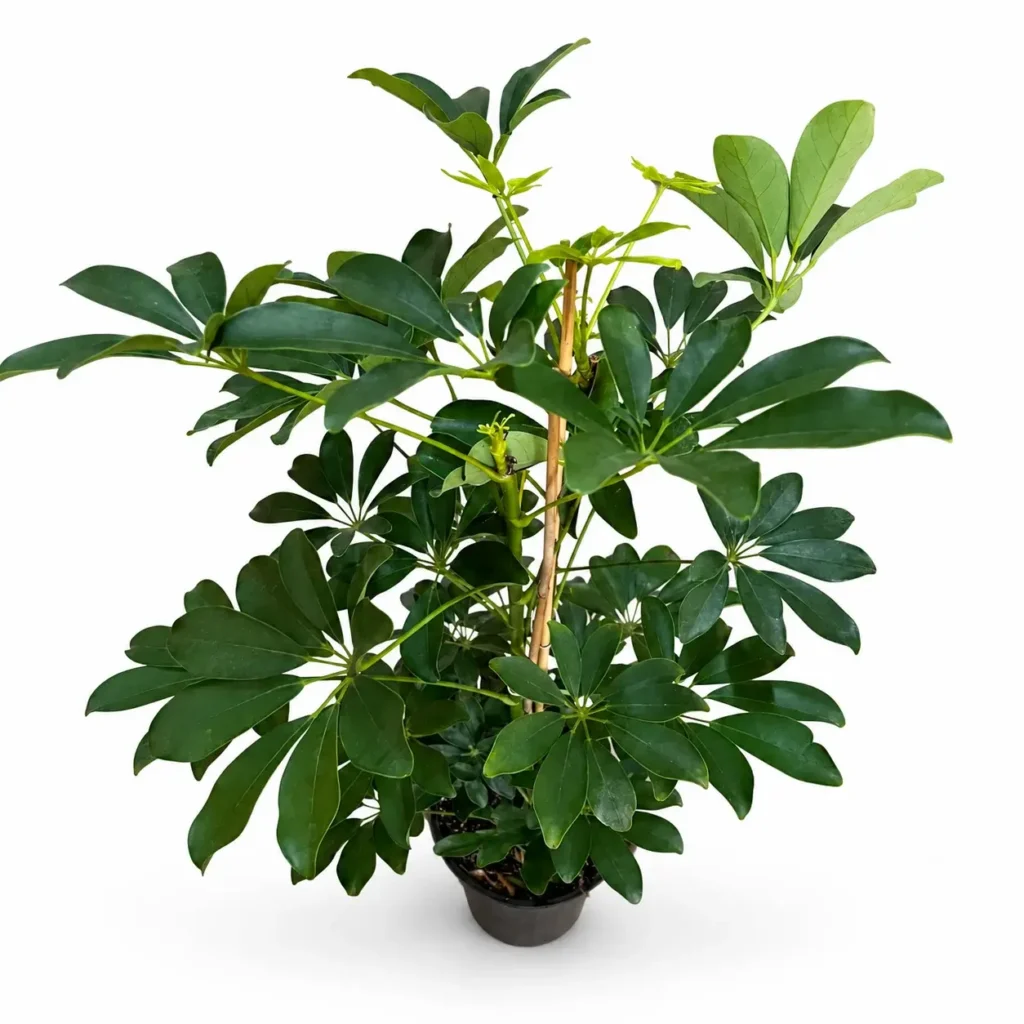
Dwarf Umbrella Tree
Heptapleurum arboricola
Updated Sep 23, 2026
Dwarf Umbrella Tree (Heptapleurum arboricola) is a compact tropical shrub with rounded clusters of smooth green or variegated leaflets. Its adaptable growth, branching habit, and tolerance of routine pruning make it well suited to bright homes and offices.
About Dwarf Umbrella Tree
Dwarf Umbrella Tree is a tropical evergreen shrub with palmately divided leaves made up of several smooth, oval leaflets. The leaflets spread from a central point at the end of each stalk, creating a full, layered canopy. Green forms have deep, even color, while variegated cultivars may carry cream, pale yellow, or light green markings.
Compared with the larger Umbrella Tree, this species has smaller leaflets, shorter stems, and a more manageable indoor habit. It can still develop into a substantial floor plant, but pruning can maintain it as a dense shrub or train it into a small tree with visible lower stems.
Indoor flowering is uncommon, so the main attraction is the foliage and branching structure. Dwarf Umbrella Tree is fairly adaptable, but it looks best when given filtered light, controlled watering, warm temperatures, and regular shaping. Sudden leaf drop usually reflects a sharp change in one of these conditions rather than a need for more fertilizer.
How to Care for Dwarf Umbrella Tree
Watering
Let the top inch (2–3 cm) of the potting mix dry before watering again. Then wet the entire root ball until water reaches the drainage holes. Empty any collected runoff so the lower roots are not left submerged.
Dwarf Umbrella Tree handles a brief dry period better than soil that remains constantly wet. Yellow lower leaves, soft stems, or leaf drop while the mix is still damp can point to excess moisture. Dry, curling leaflets and a noticeably light pot suggest that the root ball has become too dry. Check the soil instead of watering on a fixed day, especially during winter when growth and water use slow.
Sunlight
Provide medium to bright indirect light. A place near an east-facing window or behind a sheer curtain at a brighter exposure usually supports compact growth. A small amount of mild morning sun is generally acceptable, but intense afternoon rays through glass can bleach or scorch the leaflets.
The plant can remain alive in lower light, although stems may stretch and new leaves may become smaller or less numerous. Variegated cultivars need stronger filtered light to retain their pattern. Rotate the pot occasionally if growth leans toward the window, but avoid moving it repeatedly between very different light levels.
Temperature
Dwarf Umbrella Tree grows best at 64–81°F (18–27°C). This warm indoor range supports active root and shoot growth without exposing the plant to excessive heat. Keep it away from cold entryways, air-conditioning vents, and windows that become chilled overnight.
Temperatures below the preferred range can slow growth and contribute to leaf drop, particularly when the soil is wet. If the plant spends summer outdoors, wait until nights remain reliably warm and return it indoors before cool weather arrives. Introduce outdoor light gradually to prevent sunburn.
Humidity
Moderate humidity is suitable for most Dwarf Umbrella Trees. The plant usually adapts to average household air, but very dry conditions may produce brown tips or encourage spider mites. Keep it away from heating vents that blow directly across the foliage.
If the air remains dry, a room humidifier or grouping the plant with other tropical houseplants can help. Misting provides only a short-lived change and should not leave the canopy wet for long periods. Normal airflow around the leaves is still important.
Soil
Choose a rich but well-draining potting mix. A general indoor plant mix amended with perlite and fine pine bark holds enough moisture for the roots while allowing excess water to escape. The finished mix should feel loose rather than dense or muddy after watering.
Do not use garden soil in the container. It can compact indoors, drain unpredictably, and reduce air around the roots. A drainage hole is essential, even when the growing pot is placed inside a decorative planter. Check the outer planter after every watering and remove trapped water.
Pruning and Shaping
Dwarf Umbrella Tree responds well to pruning and may produce several side shoots below a cut. To encourage a fuller plant, shorten a long stem just above a leaf node. For a tree-like form, retain several strong upper branches and gradually remove unwanted lower growth rather than stripping the stem all at once.
Pruning is easiest during spring or early summer, when new growth can replace removed foliage. Use clean shears and avoid taking off a large portion of the canopy from a stressed plant. Thin, leaning stems often indicate insufficient light, so improve the placement as well as trimming the stretched growth.
Feeding
Apply a diluted balanced houseplant fertilizer during active spring and summer growth. Occasional feeding is enough when the plant is producing healthy leaves. Reduce or stop fertilizer during darker winter months, and wait before feeding a recently repotted plant. Pale growth caused by poor light or unhealthy roots will not be corrected by a stronger dose.
Repotting
Repot when roots circle densely inside the container, emerge through the drainage holes, or cause the mix to dry much faster than before. Choose a new pot only one size larger. A large jump in container size leaves more wet soil around the existing root system and makes moisture harder to judge.
Spring is a convenient time to repot. Loosen tightly circling outer roots without tearing the root ball apart, position the plant at its previous depth, and fill around it with fresh mix. If the plant has become top-heavy, use a heavier pot or a discreet support until the roots secure the stems.
Propagation
Dwarf Umbrella Tree can be propagated from healthy stem cuttings. Select a firm shoot with several nodes, remove the lowest leaves, and place the cutting in an airy, lightly moist propagation mix. Bright indirect light, steady warmth, and careful moisture help new roots form. Keep the medium damp but never saturated, since a leafless lower stem can rot before it roots.
Leaf Cleaning and Pest Checks
Dust can dull the foliage and make early pest activity harder to see. Wipe both sides of the leaflets with a soft damp cloth, supporting each cluster so the stalk does not bend. Avoid leaf-shine products, which may leave a residue and attract more dust.
While cleaning, inspect stem joints and leaflet undersides for scale, mealybugs, or fine spider-mite webbing. Sticky residue can accompany sap-feeding insects. Isolate an affected plant and begin treatment early, repeating inspections because eggs or young pests may be easy to miss.
Safety
Dwarf Umbrella Tree contains irritating calcium oxalate compounds. Chewing the leaves or stems can cause mouth discomfort, drooling, or digestive upset, and the plant can be especially harmful to cats and dogs. Keep it beyond the reach of children and pets, and wash your hands after pruning or handling damaged tissue.