
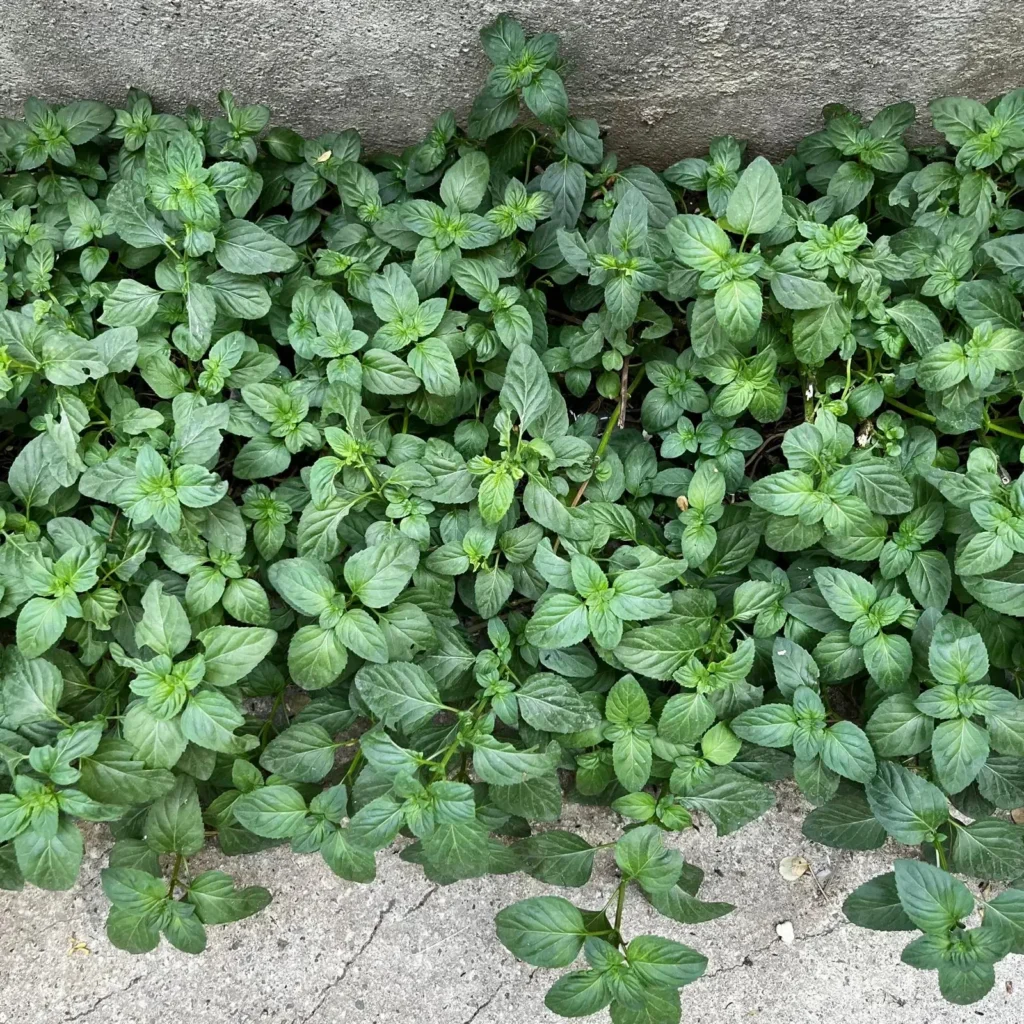
Garden Mint
Mentha
Updated Sep 13, 2026
Garden Mint (Mentha) is a vigorous perennial herb valued for its cool fragrance, flavorful leaves, and quick regrowth after harvesting. It thrives outdoors in sunny or partly shaded locations with consistently moist soil, but its spreading stems are easiest to manage in a container.
About Garden Mint
Garden Mint is a group of aromatic herbaceous perennials grown for their refreshing scent, flavorful foliage, and dependable regrowth. The leaves usually appear in opposite pairs along upright stems, and crushing them releases the familiar cooling aroma. Flower spikes may be white, pink, or purple, depending on the kind, and they attract bees and other pollinating insects during summer.
Different mints vary in leaf shape, fragrance, color, and mature size, but most share a vigorous spreading habit. New shoots rise from creeping stems at or below the soil surface, allowing a small plant to form a wide patch quickly. This growth makes Mint productive, but it can also crowd nearby herbs and perennials. A separate container is the simplest way to keep it within a defined area.
Most garden mints die back after cold weather and return from the roots in spring. During the growing season, regular picking keeps the plant leafy and compact. An outdoor pot near the kitchen provides convenient harvests while preventing the roots from moving through a garden bed.
How to Care for Garden Mint
Watering
Garden Mint has a high water requirement compared with many common culinary herbs. Its soil should stay evenly moist during active growth, especially while stems are producing tender new leaves. Check the plant whenever the surface begins to look dry, and water when the top 1 inch (2–3 cm) is starting to lose its moisture.
Soak the full root area rather than wetting only the surface. Container-grown Mint may need closer attention during hot, windy weather because a leafy plant can draw moisture from a pot quickly. Wilting stems and leaves that feel thin or limp often indicate that the rootball has become too dry.
Moist soil should not become stagnant. If water remains around the roots or the lower stems begin to darken and weaken, improve drainage and allow the surface to recover before watering again. Water near the base when possible so the foliage is not left wet overnight.
Sunlight
Full sun supports dense stems and abundant leaf production when the soil remains moist. A position that receives direct light for most of the day is suitable in mild climates. Mint also grows in partial shade, although heavy shade can produce long stems, wider gaps between leaves, and less compact growth.
In regions with intense summer heat, protection from the strongest afternoon sun can reduce wilting and scorched leaf edges. A container can be moved to a position with morning sun and light afternoon shade during these periods. Variegated kinds may also benefit from some protection because their pale leaf sections scorch more readily.
Temperature
Garden Mint grows steadily in moderate conditions around 59–77°F (15–25°C). Established plants usually cope with cooler seasonal weather, but their aboveground growth may fade and collapse after frost. This is a normal part of winter dormancy rather than a sign that the roots have died.
Hot conditions increase water loss and may make the leaves coarse or wilted if the soil dries. Afternoon shade, a moisture-retaining soil surface, and timely watering are more useful than trying to control outdoor air temperature.
Humidity
Moderate humidity is suitable for outdoor Mint. It does not require misting or an enclosed humid environment, provided the roots receive consistent moisture. Open spacing allows rain and irrigation to dry from the foliage and helps maintain healthy new growth.
Dry air combined with strong heat can increase wilting, particularly in pots. Adjust the plant’s light exposure and soil moisture rather than repeatedly spraying the leaves. In humid or rainy weather, avoid crowding stems together and remove old growth that restricts airflow through the plant.
Soil
Garden Mint performs best in rich organic soil that holds moisture without remaining waterlogged. Garden loam improved with finished compost supports vigorous leaf production and helps the root zone stay evenly damp. The soil should still have enough structure for excess rain or irrigation to move away.
For containers, choose a quality potting mix containing organic material such as composted bark or coir. A small amount of perlite can keep the mixture from becoming dense as it ages. Every container needs drainage holes, since even a suitable mixture becomes saturated when water has nowhere to escape.
Very sandy ground may dry too quickly, while compacted clay can stay wet and poorly aerated. Adding compost improves both extremes, but a raised container is often the more manageable choice where garden drainage is consistently poor.
Containing Its Spread
Garden Mint spreads through creeping stems that can root and produce new shoots beyond the original plant. An aboveground pot at least 12–16 inches (30–40 cm) wide gives the roots useful space while keeping them separate from the surrounding bed. Set the pot on paving, a saucer, or another surface where escaping runners can be noticed and trimmed.
A container sunk into a border may slow the spread, but stems can grow over the rim and underground parts may find openings. If Mint is planted directly in the ground, place it where expansion is acceptable and inspect the edge of the patch regularly. Pull unwanted shoots while they are young, removing the connected runner as well as the visible stem.
Feeding
Garden Mint growing in fertile garden soil usually needs only modest feeding. A layer of finished compost added around the plant in spring may provide enough support for the season. Container plants with pale leaves or noticeably weak growth can receive a diluted balanced fertilizer during active growth.
Heavy feeding encourages rapid, soft growth and can make the plant harder to manage. Before adding fertilizer, check whether poor light, crowded roots, dry soil, or damaged drainage better explains the change in appearance.
Harvesting & Pruning
Begin harvesting once the plant has several established stems. Snip young tips just above a pair of leaves, taking small amounts from different parts of the plant. Frequent tip harvesting encourages branching and supplies softer, more flavorful foliage than allowing every stem to become tall and woody.
For the strongest culinary flavor, gather larger amounts before many flowers open. Gardeners who value pollinators can leave some flower spikes and continue picking from the remaining shoots. Remove faded spikes if seedlings or declining leaf quality are unwanted.
When flowering has finished or the plant looks loose and tired, cut the stems back to about 2 inches (5 cm) above the soil. Healthy roots usually send up a fresh flush of leaves. Remove dead top growth after dormancy begins or before new shoots emerge in spring.
Dividing & Propagation
A container that fills with tightly packed roots may produce smaller leaves or develop a weak center. Lift the plant in spring or fall, separate the healthiest outer sections, and replant one portion in fresh soil. Division restores root space and also provides additional plants.
Stem cuttings are another reliable option. Select a healthy nonflowering tip, remove the lowest leaves, and place the bare nodes in water or moist potting mix until roots develop. Cuttings and divisions preserve the characteristics of the parent plant, while seedlings can vary because different mints cross readily.