
Greek Basil
Ocimum basilicum var. minimum
Updated Sep 15, 2026
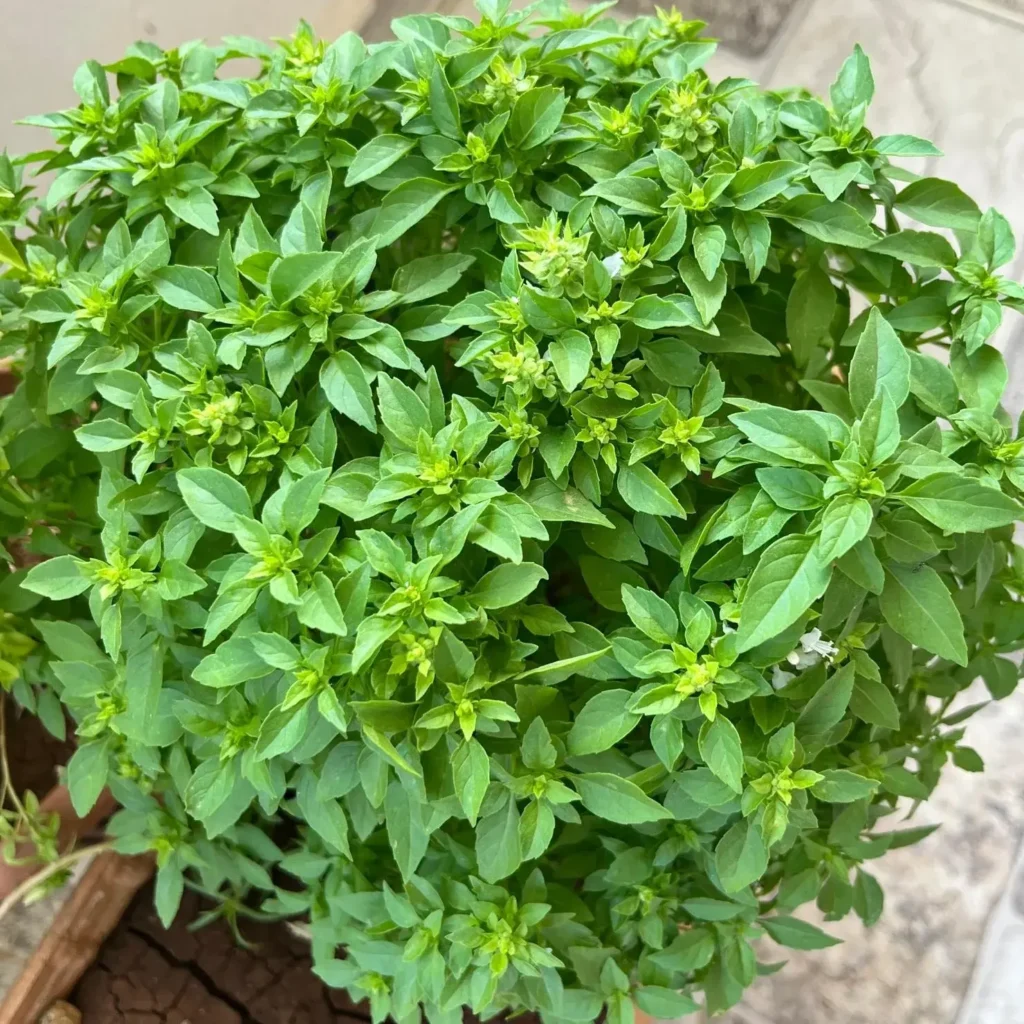
Greek Basil (Ocimum basilicum var. minimum), also known as Bush Basil, forms a compact, fragrant mound of tiny leaves suited to sunny borders and containers. Its closely spaced shoots respond well to frequent picking, providing flavorful leaves through the warm season.
About Greek Basil
Greek Basil is a tender annual herb with a naturally compact, rounded shape. Densely branched stems carry numerous small green leaves, creating a neat mound rather than the broad, open growth of many sweet basil types. The foliage releases a concentrated basil fragrance when brushed or picked, and the tiny leaves can be added whole to salads, sauces, soups, pizza, and other dishes.
Its tidy form fits the front of an herb bed, a path edge, or a container. Mature stems eventually produce slender spikes of small white to pale pink flowers that attract pollinating insects. Abundant sun, steady moisture, fertile soil, and regular tip harvesting encourage a full mound with tender new growth throughout the warm season.
How to Care for Greek Basil
Watering
Keep the soil evenly moist without leaving it saturated. Check it with a finger and water when the top inch (2–3 cm) begins to feel dry. Moisten the root zone thoroughly, then allow surplus water to escape. Small pots may need attention more often during hot, breezy weather.
A limp plant in dry soil usually needs a thorough drink, while yellow lower leaves and constantly wet soil can signal poor root aeration. Water near the base, preferably in the morning, and let the soil condition determine the timing rather than relying on a fixed schedule.
Sunlight
Place Greek Basil where it receives full sun for about 6–8 hours each day. Strong light supports tight branching, robust aroma, and a dense outline. Insufficient light produces stretched stems with wider spaces between the leaves.
Where afternoons are extremely hot, brief shade during the most intense period can limit rapid wilting and scorched edges. Introduce a plant raised in softer light to prolonged sun gradually so its foliage can adjust.
Temperature
Warm weather drives active growth, with an approximate range of 70–86°F (21–30°C) providing favorable conditions. Cool nights slow the plant, and frost damages its soft stems and leaves. Set young plants outside after frost danger has passed and the weather has settled.
During an unexpected cold spell, move containers to a sheltered position or cover plants temporarily. As fall approaches, harvest usable foliage before the first likely frost.
Humidity
Moderate humidity with open air movement suits Greek Basil. Dry air makes small pots lose moisture faster, while continually damp leaves and crowded stems are more likely to develop spots or decay. Misting is unnecessary; direct water to the soil and leave enough space around the mound for air to circulate.
Soil
Greek Basil performs best in rich organic soil that also drains freely. Well-decomposed organic matter helps the root zone hold useful moisture and nutrients without making it dense. Work finished compost into a garden bed before planting, and choose a raised position if heavy ground remains wet after rain.
In a container, a fresh all-purpose potting mix should feel light and crumbly. Perlite or fine pine bark can improve aeration in a dense mix. Drainage holes are essential because the soil should retain some moisture without becoming muddy.
Planting & Spacing
Set transplants outdoors after the last expected frost, once the soil has warmed. Keep the crown at the same depth it occupied in its original container. Allow roughly 8–10 inches (20–25 cm) between plants so each mound receives light and air and remains accessible for harvesting.
Container Growing
The compact habit fits pots, window boxes, and mixed herb planters. A container around 8 inches (20 cm) wide and deep provides one plant with useful root space, and unobstructed drainage holes prevent water from pooling. Keep the pot within easy reach for frequent picking and check it regularly in hot or windy conditions.
When several herbs share a planter, pair Greek Basil with plants that also appreciate regular moisture. Drought-tolerant herbs are poor companions because their preferred watering pattern is very different.
Feeding
Ground enriched with compost may supply enough nutrients for the season. Container plants can receive a light application of balanced liquid fertilizer during active growth. Follow the product label and avoid heavy feeding, which promotes soft growth without correcting weak light, saturated soil, or crowded roots.
Pinching & Harvesting
Begin picking after the plant has several sets of leaves and is growing strongly. Pinch a shoot just above a leaf pair rather than stripping individual leaves from multiple stems. Buds below the cut can form new branches, making the mound fuller after each harvest.
Harvest small amounts often and work around the plant so one side is not depleted. The tender tips usually have the best texture. Leave enough foliage to fuel regrowth, especially after a larger cutting.
Remove young flower spikes if continued leaf production is the priority. Once flowers open, leaf growth slows and stems become firmer. A few spikes may be left for pollinators and seed, while the rest of the plant remains available for picking.
Propagation
Seed is the simplest way to raise several plants. Start it in a warm, bright place, keep the mix lightly moist, and gradually accustom the seedlings to sun and wind before transplanting. Dry, brown seed heads can also be collected before they shed, then stored in a labeled paper packet for the following spring.
Healthy shoot tips can root as cuttings. Remove the lowest leaves, place the bare nodes in water or a light potting mix, and protect the cutting from harsh sun until roots develop. Taking cuttings before fall offers a way to preserve a favorite plant beyond the outdoor season.