
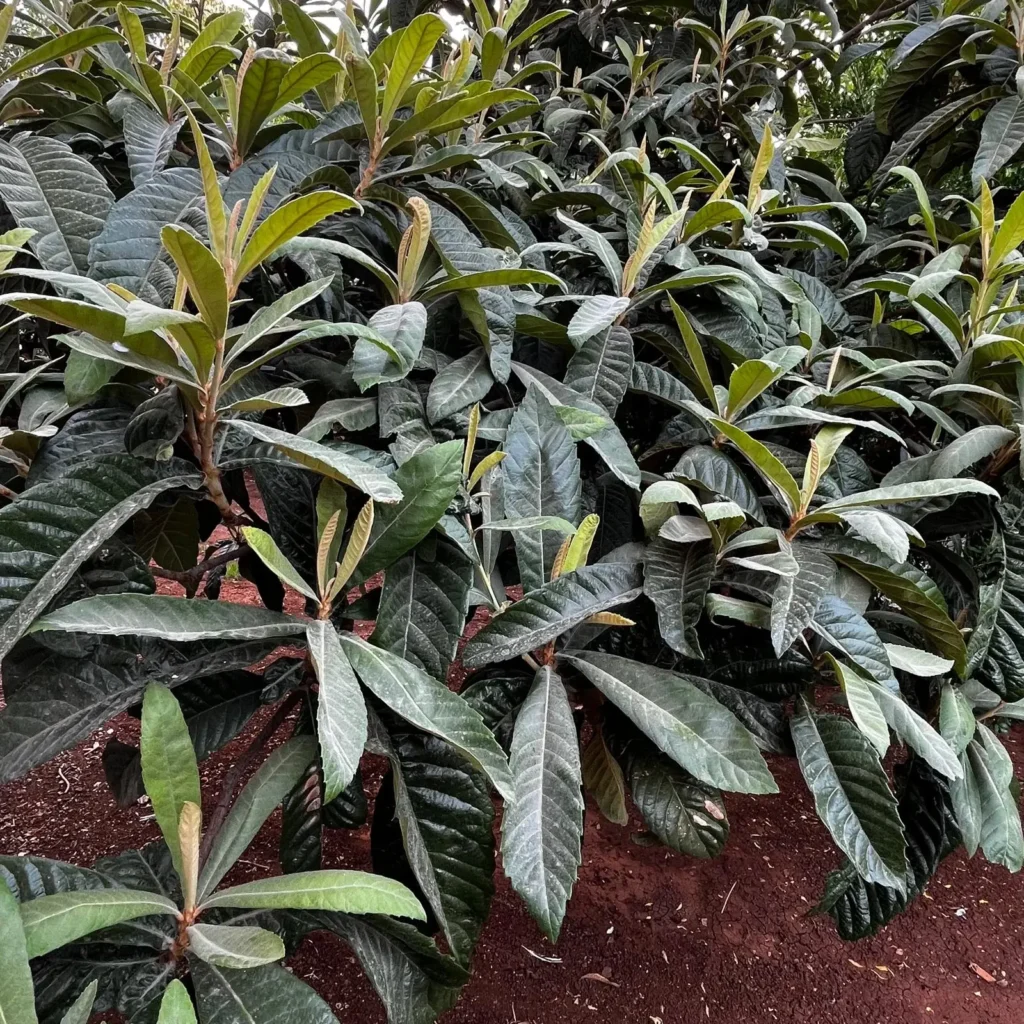
Loquat
Eriobotrya japonica
Updated Sep 20, 2026
Loquat (Eriobotrya japonica) is a broadleaf evergreen tree with large, deeply veined leaves, softly textured new growth, and clusters of cream-colored flowers that open during the cooler months. In a mild climate, those fragrant blooms develop into yellow to orange, sweet-tart fruit, giving the tree both ornamental and edible value.
About Loquat
Loquat is an evergreen fruit tree with a rounded canopy and bold, tropical-looking foliage. Its large, leathery leaves have deeply recessed veins, serrated edges, and softly felted undersides. Rust-colored hairs are often visible on new shoots, flower stalks, and young leaves.
One of its most distinctive features is its seasonal timing. Fragrant clusters of cream-colored flowers usually open from fall into winter, followed by yellow to orange fruit in late winter or spring. Depending on the cultivar, the juicy flesh may be white, yellow, or orange, with a flavor ranging from mildly sweet to sweet-tart.
How to Care for Loquat
Watering
Provide steady moisture while a young Loquat becomes established. Check the soil below the surface and water deeply when it begins to dry. This encourages roots to move outward and downward instead of remaining close to the surface.
Mature trees tolerate short dry spells, but they produce better fruit when they receive water during extended drought and while the crop is enlarging. Let rainfall guide the schedule rather than watering automatically. Persistently saturated ground can weaken the roots, so pause irrigation when the soil remains damp.
A 2–4-inch (5–10 cm) layer of mulch helps conserve moisture and limits competition from grass. Keep the mulch away from the trunk so the bark remains exposed and dry.
Sunlight
Choose full sun for the strongest flowering and fruit production. At least six hours of direct sunlight supports dense growth, good fruit color, and a more productive canopy.
Loquat can grow in partial shade, particularly when it is planted mainly for its evergreen foliage. However, reduced light usually results in fewer flowers and a smaller crop. A sunny position sheltered from harsh winter wind is especially helpful in areas near the colder edge of its fruiting range.
Temperature
Loquat grows best within an approximate range of 68–86°F (20–30°C). Warm summers and mild winters suit its year-round evergreen growth, but its fall and winter flowering habit makes the developing crop sensitive to cold.
The tree itself is considerably hardier than its flowers and young fruit. Temperatures below about 27°F (-3°C) can ruin a crop without killing the tree. In climates with occasional freezes, plant it in a protected microclimate and avoid exposed low spots where cold air settles.
Humidity
Moderate humidity is ideal, although Loquat adapts to both humid coastal regions and drier inland conditions. Dry air increases its need for dependable root moisture, especially during hot weather.
In humid climates, an uncrowded canopy is beneficial. Reasonable spacing and selective pruning allow wet leaves and flower clusters to dry more readily after rain, reducing conditions that favor fungal disease.
Soil
Loquat performs best in fertile, well-draining soil. Loam is particularly suitable because it holds useful moisture while still allowing air to reach the roots, but the tree can adapt to sandy or moderately clay-based ground if drainage remains reliable.
Slightly acidic to neutral soil generally supports good nutrient availability. Where heavy clay holds water for long periods, plant on a raised mound or improve the wider planting area. Amending only a small hole can create a basin that traps water around the root ball.
Planting
Allow enough room for the canopy to broaden without pressing against buildings, paths, or overhead lines. Dig a hole wider than the root ball but no deeper, then position the tree with the top of the root ball level with or slightly above the surrounding ground.
Return the excavated soil around the roots and water it thoroughly to settle the planting area. Keep the trunk flare uncovered. Removing nearby turf also prevents grass from competing with the young tree and reduces the risk of damage from mowers or string trimmers.
Fertilizing
Base feeding on the tree’s appearance, growth rate, and soil condition. Young trees may benefit from light applications of a balanced fruit-tree fertilizer, while a healthy mature Loquat growing in fertile ground may require little additional feeding.
If fertilizer is needed, apply a measured amount around bloom, after harvest, or during active summer growth. Avoid excessive nitrogen, which promotes soft, leafy shoots that may flower poorly and become more susceptible to fire blight.
Pruning
Loquat naturally develops an attractive framework and does not require heavy annual pruning. Remove dead or damaged wood, crossing branches, and shoots that crowd the center. Long limbs can be shortened to outward-growing side branches to keep the fruit within reach.
The most practical time for substantial shaping is soon after harvest. Flower clusters form at branch tips, so pruning heavily shortly before the blooming period can remove the next crop. Make gradual reductions rather than cutting back a large portion of the canopy in one season.
Flowering & Fruit Development
Most Loquat cultivars are self-fruitful and can produce with a single tree. A different compatible cultivar nearby may improve pollination and increase fruit quantity or quality. Bees and other insects visit the fragrant flowers, although cold or rainy winter weather can limit their activity.
Fruit often forms in crowded terminal clusters. Once the young fruit is clearly developing, remove damaged specimens and reduce overloaded clusters. Thinning directs more resources to the remaining fruit, improves size, and reduces strain on branch tips. Breathable bags can protect clusters where birds or fruit-feeding insects regularly cause losses.
Choosing a Fruiting Tree
Select a grafted, named cultivar when predictable fruit is the main goal. Named cultivars provide known characteristics such as flavor, flesh color, fruit size, and harvest season. Trees raised from seed do not reliably retain the qualities of the parent and often take considerably longer to flower and bear.
Harvesting
Leave the fruit on the tree until it develops the mature color expected for its cultivar. A ripe Loquat should be aromatic, juicy, and pleasantly sweet when tasted. Fruit picked while pale and sharply acidic will not develop the same quality afterward.
Harvest carefully because the skin bruises and tears easily. Clip whole clusters or gently detach ripe fruit without pulling on the branch tips. Refrigerate the harvest promptly when it will not be eaten or processed right away.