
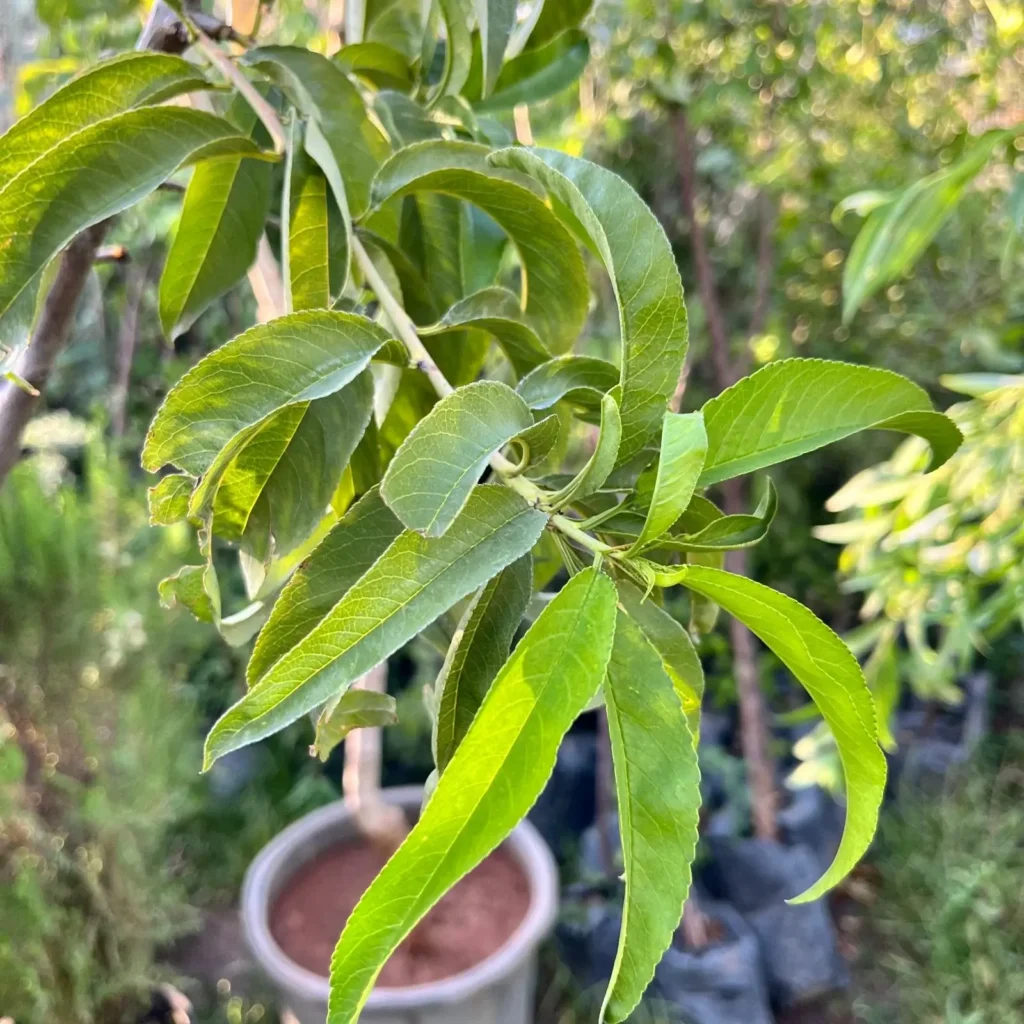
Peach Tree
Prunus persica
Updated Sep 18, 2026
Peach Tree (Prunus persica) is a deciduous fruit tree prized for its pink spring flowers, slender green leaves, and soft-skinned fruit with sweet, aromatic flesh. Its best performance comes from abundant sunlight, freely draining soil, steady moisture during fruit development, and annual pruning that keeps the canopy open and renews productive young wood.
About Peach Tree
Peach Tree is a deciduous fruit tree valued for its pink spring flowers and fragrant summer fruit. Its narrow, glossy leaves form a spreading canopy, while mature branches develop textured gray-brown bark. Fruit size, skin color, flesh color, and harvest time vary widely among cultivars.
The tree rests through winter, flowers early, and bears peaches on shoots produced the previous year. This growth pattern makes climate-matched cultivar selection and annual pruning essential. Most Peach Tree cultivars are self-fruitful, so one tree can often produce a crop, but it is still wise to check the pollination needs of the selected cultivar.
How to Care for Peach Tree
Watering
Water deeply enough to moisten the root zone, then allow the upper soil to begin drying before watering again. Newly planted trees need closer attention because their roots have not yet spread far into the surrounding ground. Established trees can rely more on rainfall but still require irrigation during extended dry weather.
Moisture is especially important while peaches are enlarging. Repeated drought can cause fruit drop, small fruit, or curled and drooping leaves. Apply water slowly beneath the canopy rather than against the trunk. Avoid frequent, shallow sprinkling and keep the foliage dry whenever possible, since a wet canopy favors fungal disease.
Organic mulch about 2–4 inches (5–10 cm) deep helps conserve moisture and limits competition from grass. Leave clear space around the trunk so damp mulch does not touch the bark.
Sunlight
Give Peach Tree full sun, preferably at least eight hours of direct light during the growing season. Strong light supports flower bud formation, fruit color, sweetness, and sturdy new shoots that can carry the following year’s crop.
Choose an open position away from the shade of buildings and large trees. A shaded tree may survive, but it is more likely to develop thin growth, flower poorly, and produce fruit that colors or ripens unevenly.
Temperature
During active growth, Peach Tree performs best in an approximate range of 64–81°F (18–27°C). Warm, sunny summer weather helps the fruit mature, while severe heat combined with dry soil can stress the leaves and developing crop.
Winter also matters because dormant buds need cool conditions before normal spring growth begins. The required amount of winter chill differs among cultivars. Select a low-chill cultivar for a mild-winter area or a higher-chill cultivar where winters are reliably cold. A poor climate match may result in weak flowering, delayed leaf growth, or an irregular crop.
Early flowers are vulnerable to late frost even when the tree remains healthy. A slightly elevated planting site with good cold-air drainage is safer than a low pocket where chilly air settles.
Humidity
Moderate humidity with steady air movement suits Peach Tree. It can grow in relatively dry summer air when the roots receive enough moisture, but persistent humidity makes leaf and fruit diseases easier to establish.
Allow enough room around the canopy for it to dry after rain. Water at soil level, prune out crowded inward-growing shoots, and clear fallen fruit from beneath the tree rather than letting decaying material accumulate.
Soil
Peach Tree grows best in deep, well-draining soil that retains some moisture without remaining saturated. Sandy loam is particularly suitable, although other textures can work when drainage and aeration are good. Slightly acidic to neutral soil generally supports efficient nutrient uptake.
Avoid low areas that hold water after rain. Peach roots are sensitive to waterlogged ground, and chronic wetness can weaken or kill the tree. In heavy clay, improving drainage across a broad area or planting on a raised mound is more effective than filling one small hole with loose material. Test the soil before trying to correct its pH or nutrient content.
Planting
Plant a dormant bare-root tree in early spring when the ground can be worked. A container-grown tree can be planted during mild weather if it can be watered consistently. Dig a hole wide enough for the roots to spread naturally, but do not bury the trunk flare. Keep the graft union clearly above the soil surface.
Backfill mainly with the removed soil and water thoroughly to settle it around the roots. Do not place concentrated fertilizer in the planting hole. Keep turf and weeds away from the young tree because they compete for water and nutrients.
Fertilizing
Feed according to soil conditions and visible growth instead of applying a heavy amount automatically. A tree with healthy leaves and steady shoot growth may need little supplemental fertilizer. Pale foliage or weak growth can justify a soil test and a measured spring application.
Too much nitrogen encourages long, soft shoots and a dense canopy at the expense of balanced flowering and fruiting. Do not assume every yellow leaf signals hunger, since wet roots, high soil pH, drought, and disease can cause similar symptoms.
Pruning
Prune Peach Tree annually because peaches form on wood produced during the previous season. An open-center, vase-like form allows sunlight and air to reach the middle while keeping fruit easier to access.
Complete the main pruning in late winter or early spring after the harshest cold has passed but before vigorous growth begins. Remove dead, damaged, crossing, and inward-growing branches first. Thin crowded shoots and reduce excessive height by cutting back to suitable side branches. Keep enough healthy young wood to support the coming crop.
Flowering, Pollination & Fruit Thinning
Most Peach Tree cultivars can set fruit with their own pollen, although bees and other insects still help move pollen among the blossoms. Avoid applying insecticides while the tree is flowering.
A healthy tree often sets more peaches than its branches can carry. After the natural early fruit drop, remove crowded or damaged fruit. Leaving about 6–8 inches (15–20 cm) between peaches gives the remaining fruit more room to develop and reduces the risk of overloaded branches splitting.
Harvesting
Harvest when the green background color changes toward cream or yellow, the fruit develops a noticeable fragrance, and the flesh yields slightly to gentle pressure. Lift and twist each peach carefully rather than pulling on the branch. Place the fruit in a shallow container because ripe peaches bruise easily.