
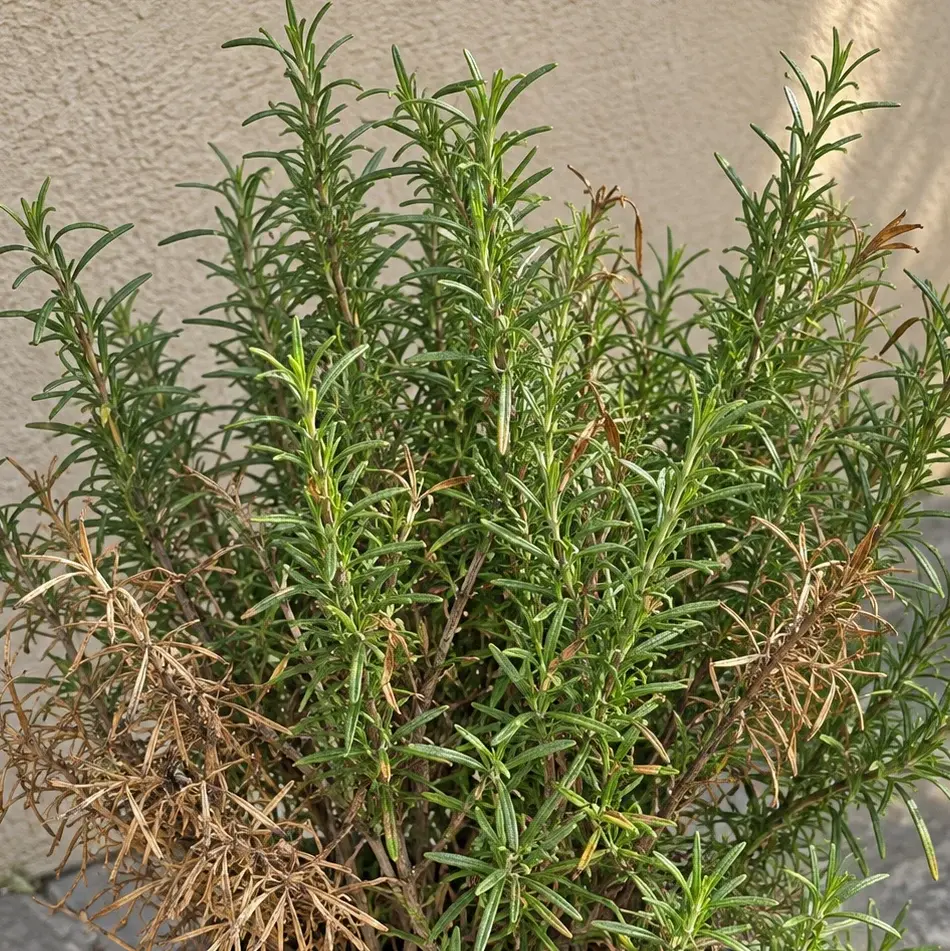
Rosemary Turning Brown and How to Help It Recover
Rosemary (Salvia rosmarinus) turns brown from several forms of stress, including excess moisture and drought. Wet soil with darkening branch tips points toward root trouble, while crisp foliage above genuinely dry soil is more consistent with thirst. Winter injury, gray mold, and sap-feeding pests create different patterns.
Start Where the Browning Began
Examine the shrub before watering or pruning it. Note whether damage began at the shoot tips, inside the canopy, on one exposed side, or across complete branches. Check whether affected leaves are brittle, soft, spotted, or coated.
- Dark tips followed by brown branches in damp soil: Poor drainage and root or crown rot are strong possibilities.
- Crisp needles and drooping tips in dry soil: The roots may not be receiving enough water, especially on a new planting or a container-grown shrub.
- Brown outer growth after cold, windy weather: Winter desiccation or freeze injury is more likely.
- Brown, soft patches with fuzzy gray growth: Botrytis gray mold may be developing in crowded, damp foliage.
- Fine pale speckling that becomes bronze or brown: Check the leaf undersides for spider mites and delicate webbing.
Do not mistake mature stems for dying foliage. Older rosemary stems naturally develop brown bark. A branch remains functional when its outer leaves and flexible tips are green. Brown foliage, bare shoots, or discoloration moving into healthy growth signals a problem.
Correct Wet Soil Before Treating the Leaves
Rosemary comes from dry, rocky environments and depends on rapid drainage. Heavy clay, low ground, roof runoff, lawn irrigation, or a blocked container hole can keep roots wet. The roots then lose function, and rot-causing organisms can become established.
Check the soil about 4 inches (10 cm) deep at more than one point. If it is still wet several days after rain or irrigation, do not add water because the foliage looks dry. Pause unnecessary irrigation, redirect runoff, and keep mulch or accumulated soil away from the crown. A buried crown remains damp and is especially vulnerable to decay.
For a potted plant, remove any saucer or outer container holding water. Slide out the root ball if the mix remains saturated or decline is rapid. Healthy roots are firm; rotted roots are dark, weak, and easily damaged. Trim clearly decayed roots and repot in fresh, fast-draining mix.
A shrub in repeatedly flooded ground may need relocation to a raised, sharply drained site. Adding a little sand to the planting hole does not correct surrounding compaction and may leave roots in a wet pocket. A soft or dark crown with browning branches warrants diagnostic testing for root rot.
Do not fertilize while the roots are failing. Extra nutrients cannot restore decayed tissue, and heavy feeding conflicts with this herb’s preference for relatively lean soil. Restore drainage and wait for healthy growth.
Water a Truly Dry Rosemary Without Creating a New Problem
Established rosemary tolerates dry conditions, but drought tolerance is not the same as needing no water. Recently planted shrubs have limited roots, and containers can dry much faster than garden soil. Prolonged heat, drying wind, or a root ball that was not thoroughly wetted at planting can produce brittle brown tips and premature leaf drop.
Probe both the original root ball and surrounding soil. If they are dry below the surface, water slowly at the base. Water may run around a hardened nursery root ball, so pause and apply a second slow pass if necessary. Let container drainage finish completely.
Wait for the soil to dry before watering again. Use moisture and weather as the schedule rather than watering on fixed days. Frequent shallow sprinkling encourages roots near the surface and leaves deeper soil dry, while repeated soaking keeps the crown unnecessarily wet. Morning watering at soil level gives any accidentally wetted foliage time to dry.
Allow for Winter Browning Before Declaring the Shrub Dead
Rosemary keeps its leaves through winter, so exposed foliage continues losing moisture. Cold soil may prevent the roots from replacing it during sunny, windy spells. Brown shoot tips or damage on one exposed side may not become obvious until growth resumes.
Wait until the plant begins its normal spring growth before making extensive cuts. Bend questionable tips gently and scrape a very small area of bark. Flexible stems with green tissue beneath the surface are alive; dry, brittle stems that are brown inside are dead. Prune dead sections back to healthy growth, but avoid cutting deeply into old, leafless wood that may not produce new shoots readily.
Before the next cold season, avoid late heavy pruning or rich fertilizer that encourages tender growth. Maintain drainage and reduce direct winter wind without wrapping the plant so tightly that damp air collects around it.
Remove Gray Mold and Improve Airflow
Botrytis is most likely when browning develops within dense, poorly ventilated growth and affected tissue carries a fuzzy gray coating. Remove diseased and fallen material during dry weather, clean the pruning tool afterward, and thin only enough healthy growth to improve air movement. Direct irrigation toward the soil and avoid keeping the leaves wet overnight.
If disease continues spreading, use only a product labeled for the diagnosed problem and for edible herbs. Follow its directions and harvest interval. A general fungicide will not reverse root rot or repair brown foliage.
Check Bronzed Foliage for Spider Mites
Spider mites favor hot, dusty conditions. Tap an affected sprig over white paper and look for moving pinpoints, then inspect for fine webbing. A strong water stream can reduce a light infestation. For persistent mites, use an insecticidal soap or horticultural oil labeled for edible plants and follow its temperature and harvest restrictions.
Prune According to Living Tissue, Not Leaf Color Alone
Brown rosemary foliage will not turn green again. Before pruning, trace each affected shoot toward the plant’s center until the stem becomes flexible and shows healthy tissue. Remove dead tips just above living side growth. If only the oldest shaded interior needles are dropping while outer shoots remain vigorous, limited thinning may be enough.
A plant recovering from drought or minor winter injury should hold its remaining green leaves and produce firm new tips. Recovery from root stress is slower; the first useful sign is that browning stops advancing. Continued dieback despite corrected drainage indicates that too much of the root system or crown may already be damaged.
When some healthy, nonflowering tips remain but the base continues to decline, take several cuttings as a backup before the damage reaches them. Do not propagate from shoots showing mold, dark stem lesions, or unexplained dieback. Long-term recovery depends on the condition rosemary is adapted to: abundant sun, moving air, lean soil, and a root zone that drains promptly after watering or rain.