
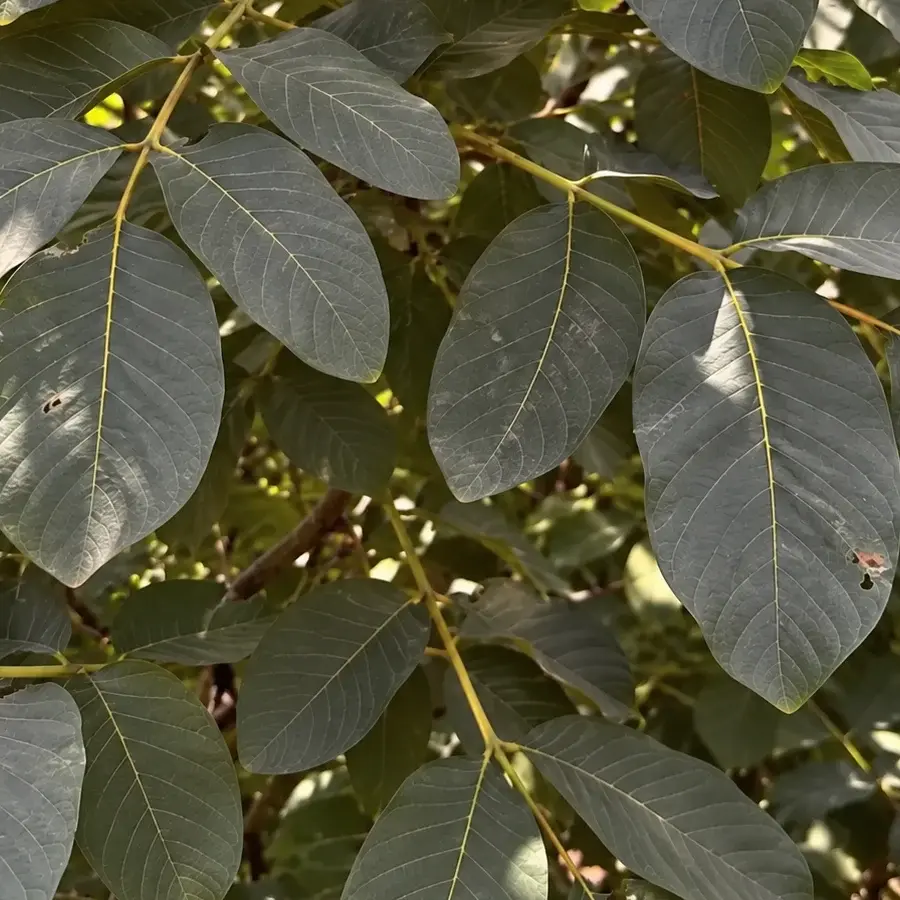
Why Is My Walnut Tree Not Producing Nuts?
English Walnut (Juglans regia) may remain nut-free because it is still immature, its male and female flowers do not overlap, spring frost damages bloom, or growing conditions limit fruit set. The first useful question is whether the tree produces flowers but no nuts, or does not flower at all.
Confirm That the Tree Is Ready to Bear
A young walnut can grow rapidly for years before producing a meaningful crop. Grafted cultivars generally begin sooner than trees raised from seed, and some seedlings take a decade or longer to crop reliably.
If the planting date is unknown, look for a graft union low on the trunk and identify the cultivar from the original supplier. This helps distinguish a named cultivar from an unselected seedling. A vigorous immature tree needs time, not bloom fertilizer or severe pruning.
Year-to-year variation is normal once bearing begins. A heavy crop may be followed by a lighter one. One poor season is less concerning than several consecutive years without flowers or nuts.
Look for Both Types of Walnut Flower
English Walnut carries male and female flowers on the same tree, but they look very different. Male flowers are the long, hanging catkins that release windborne pollen. Female flowers are much smaller and appear near the ends of new shoots, where developing nuts would later form.
Inspect the canopy during spring growth. Catkins alone do not prove that pollination can occur. No female flowers points toward age, shade, cold injury, pruning, or excessive vegetative growth. Female flowers that never swell make poor pollen timing more likely.
Take dated photographs over several weeks. This simple record shows whether catkins are releasing pollen while the female flowers are receptive and makes seasonal comparisons much more reliable.
Improve Pollination When Bloom Times Do Not Match
Many English walnut cultivars can set nuts with their own pollen, but self-fertility does not guarantee a crop. Catkins may finish shedding before female flowers are ready, or pollen may arrive too late. The overlap also changes with tree age and spring weather.
A second compatible English walnut cultivar can improve nut set when it releases pollen during the first tree’s female bloom. Choose the partner by cultivar and flowering period, not simply by buying another walnut tree. Two trees with the same timing gap may still leave the female flowers without pollen.
Walnuts are wind-pollinated, so bee activity is not the main issue. Avoid barriers that block air movement between compatible trees. If another full-size tree is impractical, a fruit-tree specialist may be able to graft a suitable pollinizer branch into the canopy.
Check for Spring Frost Damage
Walnut flowers and fresh shoots are vulnerable after growth begins. A late freeze can kill catkins, female flowers, or the tender shoot tips carrying them, leaving a leafy tree with no crop later in the season. Damage may appear as suddenly blackened, limp, or dry new tissue shortly after a cold night.
Frost injury cannot be reversed for the current crop. Wait until living and dead tissue can be distinguished, then remove only clearly dead wood. Immediate heavy cutting can eliminate surviving flower-bearing growth.
A low part of the yard may act as a frost pocket. A later-leafing cultivar in a more open position can reduce recurring losses. Do not apply extra nitrogen after frost; it cannot recreate destroyed flowers.
Restore Sunlight Without Overpruning
English Walnut crops best in full sun. A tree shaded by buildings or taller trees may remain healthy enough to make leaves yet form few female flowers. Dense, neglected growth can also leave the lower canopy unproductive.
Where movable sources of shade are involved, increase exposure gradually by reducing competing growth around the canopy. Structural obstacles may make the location permanently unsuitable for dependable nut production.
Prune with restraint. Remove dead, damaged, crossing, or crowded branches while preserving healthy bearing wood. Excessive thinning and repeated heading cuts encourage replacement shoots and delay cropping. Spread major work across multiple seasons and hire an arborist for branches beyond safe ground access.
Match Watering to a Large Root System
A mature walnut draws water from a broad, deep root zone. Frequent light lawn irrigation may wet only the surface, while prolonged drought beneath the canopy can reduce flowering, nut set, and the tree’s ability to retain developing nuts. Grass and dense weeds add competition for the same moisture.
During extended dry weather, water slowly beneath and just beyond the canopy rather than beside the trunk. A thorough soaking followed by time for drainage is more useful than daily sprinkling. Adjust the interval for rainfall and soil type.
Poor drainage can be equally limiting. Standing water, persistently saturated soil, and sparse growth suggest that roots lack oxygen. Correct runoff or drainage problems before increasing irrigation. A 2–3-inch (5–7 cm) layer of organic mulch can reduce moisture loss and weed competition, but keep it away from the trunk and root flare.
Fertilize From Evidence, Not From the Missing Crop
A lack of nuts does not automatically indicate a nutrient deficiency. If the canopy is green, shoot growth is strong, and leaves are normal in size, additional fertilizer may be unnecessary. Too much nitrogen favors long, soft shoots and can keep the tree focused on vegetative growth.
Arrange soil or leaf testing when growth is weak, foliage is pale, or yields remain poor despite successful pollination. Apply only the nutrient and amount supported by the results. Boron deficiency can reduce yields, but excess boron damages the tree. Never add boron as a speculative fruiting treatment.
Determine Whether Small Nuts Are Being Lost
A tree that sets tiny nuts and then loses them has a different problem from one that never flowers. Blackened female flowers or young nuts after wet spring weather can indicate walnut blight. Small nuts that stop developing and fall may also reflect frost, drought, or early insect injury. Nuts that grow normally and then vanish cleanly are more likely being taken by squirrels or other wildlife.
Inspect fallen nuts for black lesions, holes, larvae, or damaged husks. A confirmed disease or insect problem may require sanitation and a product labeled for walnuts, with timing matched to the organism. Spraying after the nuts disappear will not restore that crop.
Evaluate the Next Bloom Before Making More Changes
Age, pollination, and frost cannot be judged from the summer canopy alone. During the next spring bloom, record the appearance of catkins, female flowers, cold damage, and the first swelling nuts. This reveals the stage at which production stops.
If flowers overlap and small nuts remain attached, continue steady watering and avoid unnecessary feeding or pruning. If female flowers repeatedly receive no pollen, add a compatible pollinizer rather than changing general care. When the tree never forms female flowers despite being mature, healthy, and sunny, confirm its cultivar and graft history with a fruit-tree specialist. A lasting solution comes from correcting the stage that fails, not treating the absence of nuts as a single fertilizer problem.